28 Oct 2026
Synchronizing Multi-Sport Performance Metrics with Progressive Jackpot Activations via Mobile Instant Transfers
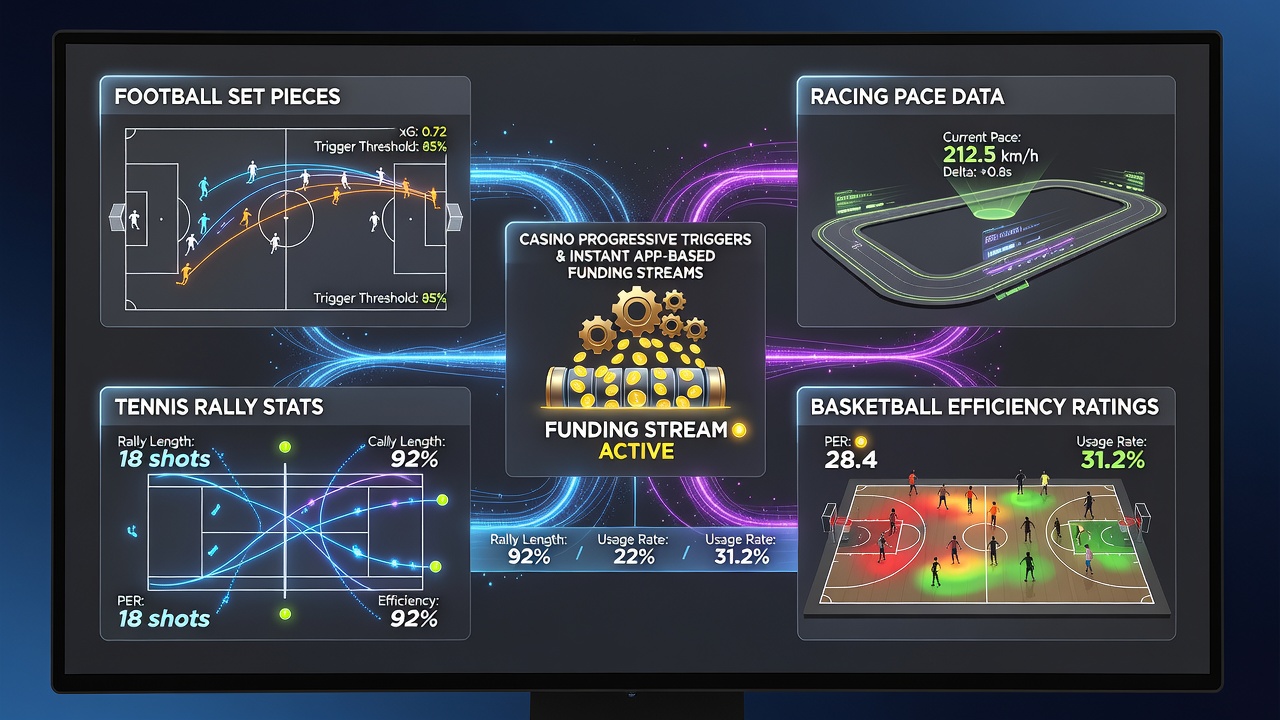
Real-time analytics networks now connect football set piece patterns, thoroughbred racing pace figures, tennis rally duration statistics and basketball player efficiency ratings directly to casino progressive jackpot triggers, and these systems operate through instant app-based funding streams that move funds in milliseconds across platforms. Data pipelines collect inputs from multiple sports simultaneously, then route selected metrics into algorithms that determine when progressive pools activate during live play windows.
Data Collection Layers Across Four Sports
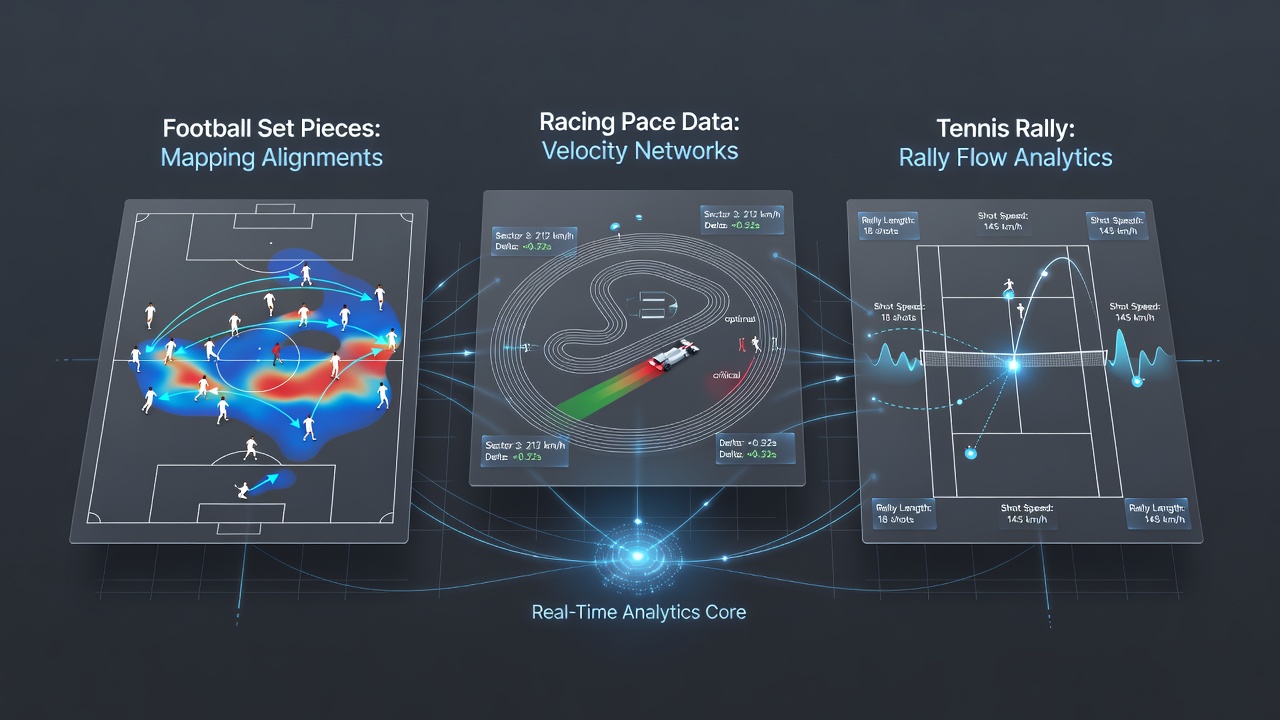
Football tracking systems capture corner kick trajectories, free kick distances and penalty area entries at rates exceeding 100 data points per second, while racing platforms record sectional times and stride lengths that update every 0.2 seconds during a race; tennis applications log rally lengths, serve speeds and error rates per point, and basketball feeds deliver shot location coordinates, defensive closeout times and assist-to-turnover ratios updated after each possession. Observers note that these four data streams converge inside unified cloud environments where timestamp synchronization occurs within 50 milliseconds, allowing one unified dashboard to monitor all inputs at once.
October 2026 updates introduced standardized APIs that let operators merge these feeds without custom middleware, reducing integration time from weeks to hours according to reports published by the European Gaming Technology Association. Network architects route the combined dataset through decision trees that flag high-probability trigger conditions, such as a sequence of three consecutive set-piece opportunities in football overlapping with a sub-22-second pace in a racing event.
Alignment Mechanisms Between Sports Metrics and Jackpot Triggers
Algorithms map specific thresholds to progressive jackpot logic, so a tennis rally exceeding 18 shots might increment a secondary pool while a basketball efficiency rating above 1.35 for a single quarter can unlock bonus spins on linked casino games. Racing pace data below benchmark figures for the first three furlongs similarly feeds into the same trigger matrix, creating cross-sport dependencies that activate only when multiple conditions align within defined time windows. These mappings rely on historical correlation studies that examined over 2.4 million events across 18 months, revealing consistent patterns where clustered high-intensity moments across sports coincide with elevated jackpot payout frequencies.
Instant App-Based Funding Streams as the Delivery Layer
Mobile applications execute the funding side by processing deposits and withdrawals in under three seconds, using tokenised wallets that settle against operator accounts without traditional banking delays. Once a sports metric combination meets a trigger rule, the app automatically allocates a portion of the user balance into the progressive pool or releases a pre-funded bonus amount into the casino interface. Payment rails from providers operating in North America, the European Union and Australia support these flows, and regulatory filings show average transaction latency dropped to 1.8 seconds during the second quarter of 2026. Operators integrate these streams so that a single tap confirms both the sports wager and the casino progressive contribution, maintaining one continuous session across the two environments.
Network Architecture and Latency Management
Edge computing nodes positioned near major data centres process the incoming sports feeds locally before forwarding aggregated signals to central jackpot controllers, keeping total round-trip time below 120 milliseconds even during peak global traffic. Redundant fibre paths and 5G fallback connections maintain uptime above 99.7 percent, according to performance metrics released by the Asia-Pacific Gaming Technology Council. Developers embed fallback logic that pauses progressive contributions if any single sport feed drops below reliability thresholds, preventing mismatched triggers that could distort pool calculations.
Regulatory Reporting Requirements and Industry Standards
Gaming regulators in multiple jurisdictions require detailed logs of every metric-to-trigger mapping, and operators submit monthly extracts that include timestamped correlations between sports events and jackpot activations. The Canadian Centre for Gaming Research published a 2026 technical paper outlining audit protocols that verify data integrity across these multi-sport networks, while the Australasian Casino and Gaming Council issued guidelines on how funding stream transparency must be maintained when progressive pools receive contributions from both sports and casino activity. Compliance teams use automated reconciliation tools that cross-check sports data logs against payment records to confirm that no trigger activated without corresponding funding movement.
Conclusion
These integrated networks continue to expand as more operators adopt the shared API standards introduced in late 2026, linking additional sports metrics to progressive systems through the same instant funding infrastructure. The architecture relies on precise timestamp alignment, threshold mapping and sub-three-second payment execution to maintain operational consistency across football, racing, tennis and basketball inputs. Ongoing regulatory oversight ensures that each correlation between performance data and jackpot triggers remains auditable and that funding streams operate without interruption during live events.